
12 Questions to Ask Any Dog Trainer Before You Hire Them (Including Me)
Here’s something most dog owners don’t know: Florida doesn’t license dog trainers. Anyone can print business cards tomorrow and start charging for lessons. That means the job of checking a trainer falls on you.
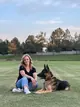 By MJ Stoltz, ABCDTIACP Professional MemberUpdated November 2026
A few honest questions tell you a lot. Here are the ones I’d ask if I were hiring a trainer for my own dog, what a good answer sounds like, and the red flags to watch for. I’ve included my own answers too, so you can hold me to the same standard.
About Experience and Credentials
1. How long have you been training dogs professionally & hands-on, and how did you learn?
Listen for real, hands-on experience: years of working with dogs, mentorship under experienced trainers, and ongoing education. A weekend course alone isn’t much.
More than ten years. I started as a shelter volunteer, apprenticed under experienced trainers, and worked for established training companies before starting my own business.
2. What certifications or memberships do you have?
Certifications don’t guarantee a great trainer, but they show someone invested in learning. Ask what the certification actually required.
I’m an Animal Behavior College Certified Dog Trainer (ABCDT), which included learning theory, canine behavior and supervised hands-on training. I’m also a professional member of the International Association of Canine Professionals (IACP).
3. Have you worked with dogs like mine?
A trainer who’s great with puppies may not have much experience with a reactive 90-pound shepherd. Ask for examples.
Ask me on our phone call. Puppies, leash manners, reactivity, resource guarding and dog-to-dog aggression are a big part of my regular work.
About Methods
4. What methods and tools do you use, and why?
A good trainer can explain their approach in plain words and tell you why they’d use something with your dog. Be cautious of anyone who can’t or won’t explain.
There’s no single formula for every dog. My approach blends positive reinforcement with structure, consistency and clear communication. I also regularly use play-based training. Food, toys, play and praise all show up as motivators. While I’m open to all tools, I don’t require any specific tool to train your dog, and no tool will be used without your knowledge and permission. Also, no tool teaches a dog anything on its own; timing, clarity and consistency do, so our training focuses more on communication and technique than it does on any tool.
5. What will you do if my dog gets it wrong?
This question tells you more about a trainer’s methods than any label. Ask for a specific example.
Most of the time if your dog is getting it wrong, that’s on us, not your dog. It’s our job to set your dog up for success. If they get it wrong, that’s information for us that we moved too fast or missed a step. We’ll take a step back, figure out what went wrong, and try again.
6. Can I watch, and will I be involved?
Red flag: a trainer who won’t let you see how they work with your dog.
Yes. With private lessons, you’re hands-on from the first session. With Homeschool programs, I work with your dog and then teach you exactly what we did and how to keep it going. Homeschool is designed to help you out by allowing me to get practice with your dog when you’re busy, but you are always welcome to participate in sessions should you want to.
About Results
7. Do you guarantee results?
This is the one that surprises people: a guaranteed outcome is a red flag. Dogs aren’t machines, and a lot of progress depends on how well you’re following the process outside of lessons.
I promise my real effort, straightforward guidance and a plan built around you and your dog. I won’t promise an exact outcome or a fixed timeline, and I’d be wary of anyone who does.
8. What happens if we’re not making progress?
Listen for a plan: adjusting the approach, checking for medical issues, or referring you to someone better suited.
We problem-solve it together. That might mean adjusting the plan, changing how you communicate with your dog, or bringing your vet in if something medical could be involved.
9. Is there any kind of case you’d refer to someone else?
A trainer who says they can handle anything isn’t being honest. Good trainers know their limits. And all trainers have certain behaviors they enjoy working with (and so spend more time and energy learning about and getting experience with) and certain behaviors they just don’t enjoy working with.
Yes. Some cases involving serious aggression toward people are better handled by a trainer who enjoys that work and specializes in it, or a veterinary behaviorist. If I think that’s true for your dog, I’ll tell you plainly and help you find the right person. Also, while I enjoy working with anxiety, there are some extreme cases that I think are better handled in a board & train, which I do not currently offer.
About the Practical Stuff
10. Where do lessons happen, and how long are they?
Usually in your home, where your dog lives and where the problems happen. Once things are going well, we take it out into public places. Sessions usually run 60 to 90 minutes.
11. What does it cost, and what’s included?
Ask for the full picture up front: number of sessions, how long the program runs, what support you get between lessons, and what happens after.
I have a set of training programs that are clearly outlined on my website, and that we talk about in even more detail in a consultation. Each program comes with a set number of sessions, and all my clients have access to support from me between sessions, as well as support for a year following sessions.
12. Can I read reviews from real clients?
Look for reviews on Google, where the trainer can’t edit or pick them, not just testimonials on their own site.
My Google reviews are all public. Read as many as you’d like.
Red Flags to Watch For
- Guaranteed results or a fixed timeline
- Can’t or won’t explain their methods
- Won’t let you watch or be involved
- Says they can fix any dog, with no limits
- Blames you or your dog instead of adjusting the plan
- Pressures you to sign up on the spot
Wondering whether you need a trainer or a behaviorist? Read Dog Trainer vs. Dog Behaviorist.
Hiring a Dog Trainer FAQ
Do dog trainers need a license in Florida?
No. Florida doesn’t license dog trainers, so anyone can offer training. That’s why it’s worth asking about experience, education and methods before you hire anyone.
Is it a red flag if a dog trainer guarantees results?
Usually, yes. Dogs aren’t machines, and a lot of progress depends on what happens between lessons. A good trainer will promise real effort, honest guidance and a clear plan instead.

Ask Me Anything
I’d genuinely rather you ask me hard questions than hire me without knowing how I work. Fill out my contact form and use this list. If I’m not the right fit, I’ll tell you.
