Puppy Biting: Why It Happens and How to Stop It
If your arms look like you’ve been fighting a cactus, you’re not alone. Puppy biting is the number one complaint I hear from new puppy owners, usually right after potty accidents.
 By MJ Stoltz, ABCDTIACP Professional MemberUpdated November 2026
Puppy biting is normal, it’s temporary, and there’s a lot you can do to make it fade faster. Give their mouth a job, make biting boring, and protect nap time.
Why Puppies Bite
Puppies explore the world with their mouths, the way babies grab everything with their hands. They also bite because:
- They’re teething. Adult teeth usually come in between about 3 and 6 months old, and chewing feels good on sore gums.
- They’re playing. Puppies wrestle and bite each other in play. Your hands and ankles are the closest thing to a littermate.
- They’re overtired. This is the big one. A puppy who “turns into a shark” in the evening usually needs a nap, not more play.
- It works. If biting gets you to squeal, wave your hands or run, that’s the most fun game in the house.
What Actually Helps
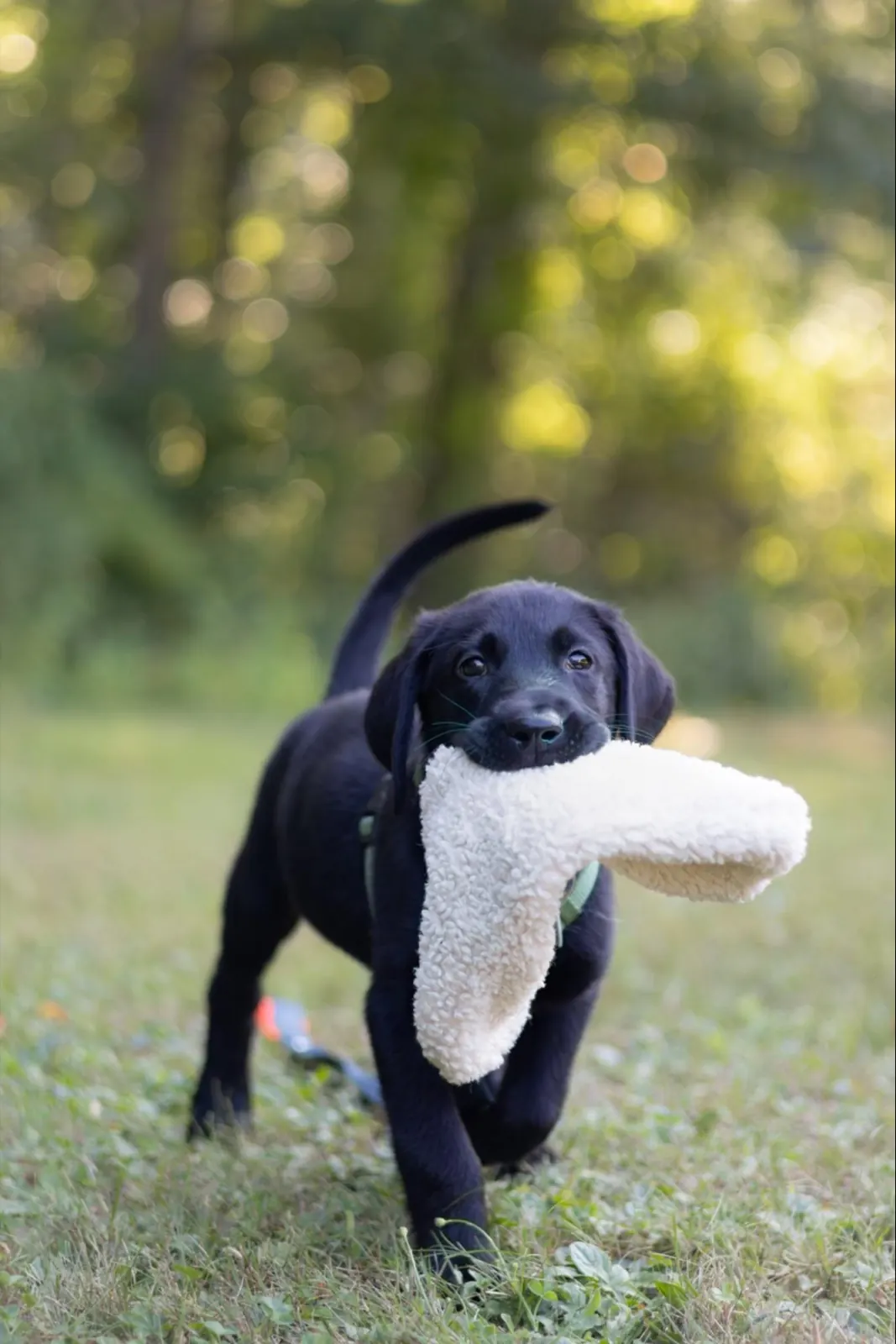
- Give their mouth a job. Keep a toy within reach at all times and offer it before the teeth land on you. Soft tug toys, chews and frozen toys are great for teething puppies.
- Make biting boring. When teeth touch skin, stop the game. Go still, take your hands away slowly, or calmly step behind a gate for a few seconds. Play starts again when your puppy is calmer.
- Prioritize nap time. Young puppies need a lot of sleep, often 18 hours or more a day. Short play, potty break, then a nap in a crate or pen cuts down on biting more than anything else I know.
- Play games that teach control. Tug with clear start and stop rules, “find it” with treats, and short training sessions all teach your puppy to use their brain instead of their teeth.
- Reward the calm moments. Notice when your puppy is lying quietly or chewing their own toy, and reward it. Puppies repeat what pays off.
I often tell my clients that when their puppy starts being nippy they should calmly and abruptly ignore their puppy entirely. If you were sitting on the floor with them, calmly stand up and pretend to check your watch or look out the window. Puppies want attention, and I want them to get as little attention as possible for the bitey game, as if they accidentally pushed the “human attention power button” and turned us off.
What Makes Puppy Biting Worse
- Rough play with hands, like wrestling or batting at the puppy’s face
- Quick movements when trying to take your hands away and turning your back to them
- Holding their mouth shut, tapping their nose or other physical punishment, which can make a puppy fearful or more bitey
- Skipping naps and expecting a tired puppy to settle on their own
- Kids running and squealing while the puppy chases them
Florida Puppies Have It Extra Tough
On a lot of summer days here, it’s too hot for outdoor play for a young puppy for long. All that bottled-up energy has to go somewhere, and it often goes into your ankles. On hot days, swap long outdoor play sessions for short indoor games: “find it” with kibble, short training sessions, a snuffle mat, or a few minutes of tug on the lanai in the early morning. Fifteen minutes of brain work can tire a puppy out more than a long walk.
When to Be Concerned
Most puppy biting is play. Call a trainer sooner rather than later if your puppy:
- Stiffens, freezes or growls when you come near their food, toys or bed
- Bites hard when you handle their paws, ears or collar
- Bites and won’t let go, even when play stops
- Seems scared, not playful, when they bite
- Is still biting hard and often past about 6 months old
Those can be early signs of fear or resource guarding, and they’re much easier to work on in a puppy than in an adult dog.
Kids and Puppy Biting
Puppy teeth and little kids are a tough mix. Kids naturally squeal and run, which is exactly what makes biting fun. Supervise every puppy and child interaction, give kids a toy to offer the puppy instead of their hands, and use gates or a pen so everyone gets a break.
How I Help With Puppy Biting
Nipping is one of the first things we work on in every puppy program. In your home, I’ll show you how to set up your day so your puppy gets enough sleep, which games to play, and exactly what to do in the moment when the teeth come out. You’ll also work on potty training, crate training and the first basics.
Puppy Foundations
Start puppyhood off on the right track, with all the essentials and a trainer in your corner.
- Lessons5 private lessons
- WhereIn your home
- Timeline5 weeks or less
Puppy Plus+
Everything in Puppy Foundations, plus real-world adventures so your puppy learns to handle life outside your living room.
- Lessons8 private lessons
- Where6 at home, 2 out in the world
- Timeline8 weeks or less
Puppy Pro
The full puppy experience, with me doing the heavy lifting while you're busy living your life.
- Homeschool6 visits + 3 field trips
- Lessons5 private lessons
- Timeline5 weeks or less
Puppy Biting FAQ
At what age do puppies stop biting?
Most puppies bite a lot less once their adult teeth are in, around 6 months. How much they bite before then depends on how much they get to practice it. Consistent, calm responses speed things up.
Should I yelp when my puppy bites?
It works for some puppies and makes others more excited. If yelping makes your puppy bite harder, stop the game quietly instead.
Is my puppy aggressive?
In most cases, no. Play biting comes with a loose, wiggly body and bouncy play. If your puppy goes stiff, freezes, growls over things, or seems afraid, that’s worth a call.
Do you train puppies in North Port and Punta Gorda?
Yes. I train puppies in their homes throughout Port Charlotte, Punta Gorda, North Port and the nearby communities.
Ready for a Puppy Who Uses Their Mouth Nicely?
Tell me about your puppy. We’ll talk through what’s happening and which puppy program fits.
